Wabi-Sabi
The Tender Ruin
A WORD ENGLISH NEVER MADE · READ THE CUSTOMS HOUSE
EXTREME
RARE
RARE · Rare-Liminal
Japanese. Beauty that is imperfect, impermanent and incomplete. The crack, the weathering, the asymmetry, valued as the thing itself and never as the flaw in it.
The word
Japanese, two ideas fused: wabi, the beauty of the spare and imperfect, and sabi, the beauty that time deposits. Zen aesthetics and the tea ceremony refined it for centuries; kintsugi, repairing broken pottery with gold, is its clearest argument.
The feeling
Relief, first. The demand for perfection drops away and the cracked, the faded and the asymmetrical stop being tolerated and start being preferred, because they are honest about time. It is a quiet feeling with a long half-life, closer to trust than to pleasure.
Against its neighbours
Perfection asks how close a thing comes to its ideal; wabi-sabi asks what time has done with it, and calls the answer the point. Mono no aware aches at impermanence in the moment of noticing; wabi-sabi goes further, and finds the impermanence beautiful in itself.
In the work
Damage rendered with affection. Surface treated as history rather than error.
Wabi-Sabi is held in the archive. These prints carry its family.
Open editions from $75. Free US shipping.
-
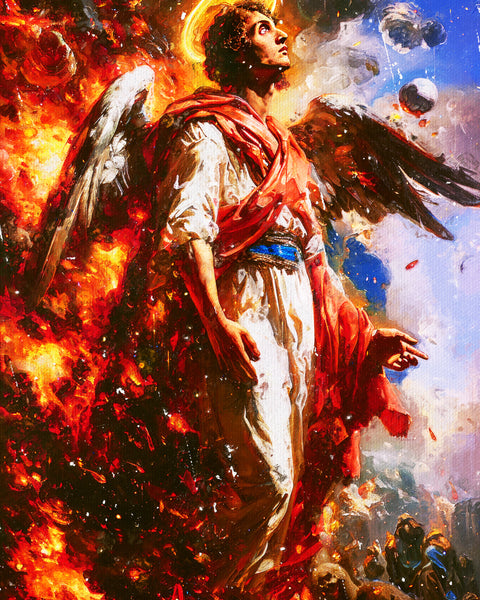
- Ac2
- Hs
- Aw
- Rn
- Nm
Closer To Paradise
-
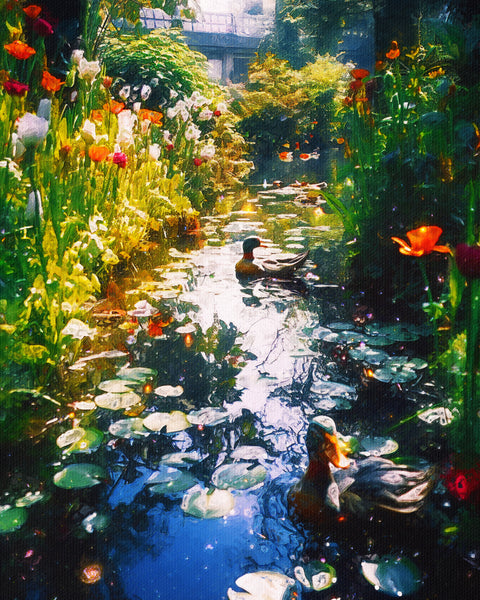
- St2
- Gt
- Wn
- Pc
- Mn
For a Moment the Waters Stood Still
-
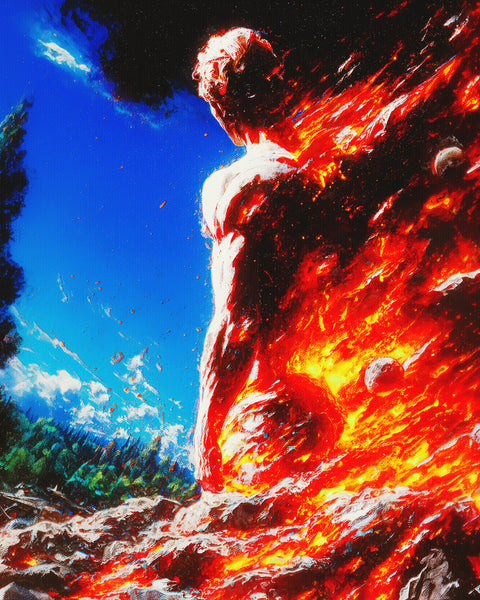
- Dt2
- Hs
- Tm
- Gt
- Ws
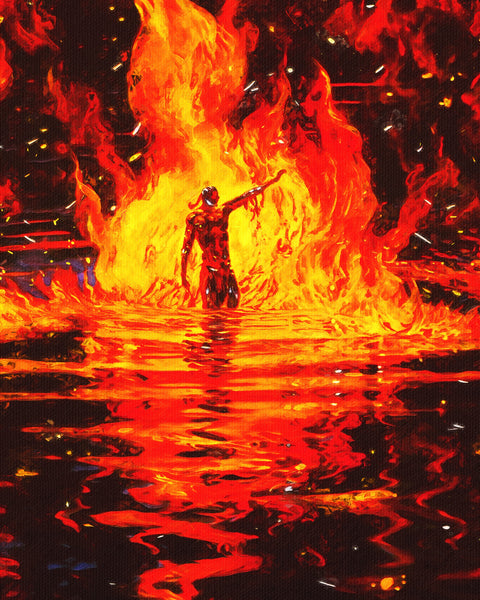
Let the Embers Speak My Name, and Not in Vain


1 work composed with Wabi-Sabi
How big, actually.
Drawn to scale against a person of average height. Every size is a 4:5 rectangle, the same proportion as the work itself, so nothing is cropped to fit.
Sizes are the printed image. Framed works add the moulding around that. Standard US shipping is free at every size.
Paper, or canvas.
Same image, same inks. What changes is the surface it is printed on. Tap either one.
-
PRINT
Hahnemühle Photo Rag
The paper itself. A heavy 100% cotton matte sheet with a smooth surface, printed edge to edge with no border. Ships flat, or rolled in a tube at large sizes.
- Every size, up to 40 × 50
- You pick the frame
- Just paper and ink
- Needs framing to hang
-
CANVAS
Satin poly-cotton, gallery wrap
Printed on canvas, then stretched by hand over solid wood. The image continues around the sides, so there is no border and no glass.
- Hang it the day it lands
- No glass, no glazing
- Real depth off the wall
- Up to 36 × 45
Series 001 numbers are shared across every size and material, and the certificate records exactly which object you own. Open editions carry no number and no certificate.
Framed, or not.
One frame, satin black, solid wood. We pick the moulding that suits the size and the material, so it arrives ready to hang. Tap either one.
-
NONE
The work, as it is
A paper print ships flat or rolled and you frame it your way. A canvas needs nothing: it is stretched, wired and ready for the wall the day it lands.
- The lightest to ship
- Your framer, your call
- Canvas hangs as it is
- Every size
-
BLACK
Solid wood, chosen for the size
Sealed, hung with hardware fitted, nothing left to arrange. Paper sits behind acrylic; canvas floats inside the moulding with no glass at all.
- STANDARD BLACK ⅞ in face · ¾ in deep · behind acrylic Paper, 8 × 12 and 12 × 18
- ALTO BLACK THIN 1⅜ in face · ⁹⁄₁₆ in deep · behind acrylic Paper, 16 × 24 and up
- BLACK 2 FLOAT ⅜ in face · 2 in deep · ¼ in reveal · no glass Canvas, every framed size
Framed work ships boxed with the hardware fitted. The largest sizes are sold unframed, because a frame that size can only travel by freight.
The list hears first.
Composed with
The rest of the Rare-Liminal family
Where Wabi-Sabi sits Wb · RARE-LIMINAL FAMILY
OPEN THE TABLE
1IgFervour
2EcEcstasy
3TnTension
5PrPower
6NtAnticipation
9SgSurrender
7TmTranscendence
8AcAscendance
10DrDread
4FrFear
11SuSublimity
12AwAwe
13WnWonder
14EnEntrancement
15AeAesthetic Pleasure
16CrCraving
17EvEnvy
18EpEmpathic Pain
25VdVoid
24DcDecay
21RnRuin
22GrGrief
26NsNostalgia
23SdSadness
27MxMelancholy
28CtTenderness
19AdAdmiration
20JoJoy
32DtDevotion
34LoLonging
36SlSolitude
37StStillness
33RtRelief
30GtGratitude
38SfSatisfaction
31HsHope
39CmCalm
35WcContempt
29AnAnger
47EmEmbarrassment
44DxDisgust
43AxAnxiety
45SmShame
46GlGuilt
40SpSurprise
49CnConfusion
41InInterest
42TsTrust
48EqEquanimity
50BrBoredom
55RgRegret
57NzNumbness
52LnLoneliness
58AqAwe-Quiet
60DzDetachment
59PcPeace
53WtWeariness
54RsResignation
56PdPride
61LvLove
51CgCourage
62SaSaudade
63HrHiraeth
64MnMono no Aware
65ShSehnsucht
66YbYaaburnee
67DvDépaysement
68NmNuminous
69ApApophenia
70KyKoyaanisqatsi
71AbAbject
72WsWonder-Sacred
73DuDuende
74PtPresence
75WbWabi-Sabi
?
?
?
?
?
RARE-LIMINAL FAMILY75 NAMED · 5 UNDISCOVEREDTAP ANY CELL TO OPEN ITS PAGE