Wonder
Remnant
EXTREME
RARE
HIGH-MID · Rising
Open curiosity in front of the unexplained. The mind stays active and starts asking, because the thing is strange and not yet threatening. Wonder asks. Awe is silenced. Both meet something outside the existing categories, and only one of them can still form a question.
The word
From the Old English wundor, a marvel, cognate with the German Wunder, and past that the trail goes cold; no one has convincingly traced it further. The word named the astonishing object first and the feeling it caused second. Philosophy claimed it early: both Plato and Aristotle set wonder at the start of the whole enterprise.
The feeling
An opening rather than an overwhelm. The eyes widen, the head tilts, and the first question arrives almost immediately, because in wonder the mind stays on its feet. Time goes generous; there is suddenly enough of it to look. The strange thing in front of you registers as invitation, not threat, and attention accepts.
Against its neighbours
Awe is silenced by what it meets; wonder can still form a question, which is the entire difference. Interest examines things that fit the existing categories; wonder stands at the edge of them, where the explanation has not been built yet.
In the work
Evidence without explanation. An object or an event that clearly meant something, presented with the meaning removed. The piece supplies enough to start a reading and not enough to finish one.
11 works composed with Wonder
-
- St2
- Gt
- Wn
- Pc
- Mn
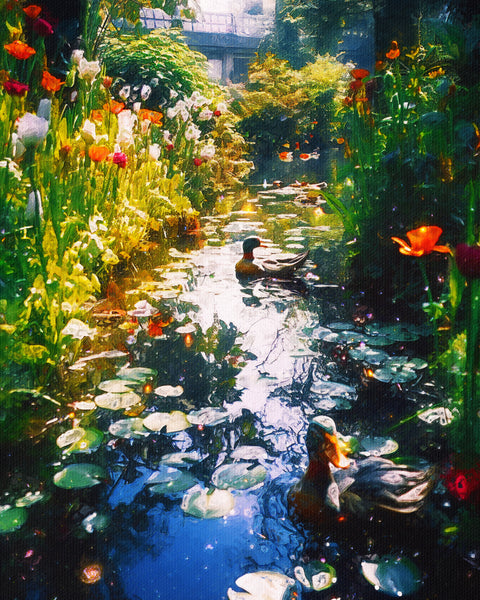
For a Moment the Waters Stood Still
-

- Jo2
- Ig
- Wn
- Cm
- Ws
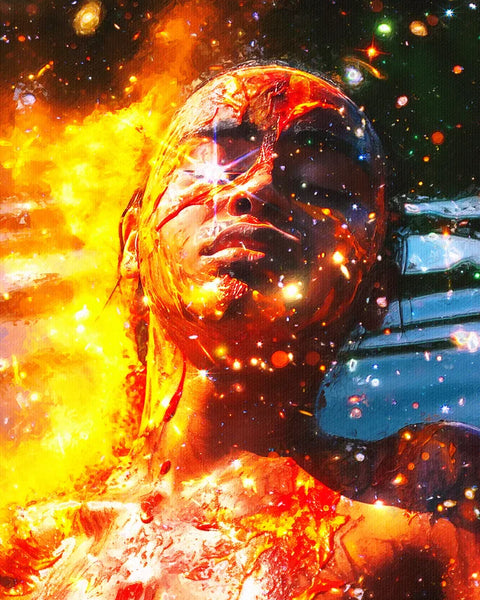
Signs of the Solstice
-
 APEX, 1 edition. Open the tier key.
$352SOLD
APEX, 1 edition. Open the tier key.
$352SOLD- Sg2
- Hs
- Aw
- Wn
- Mn
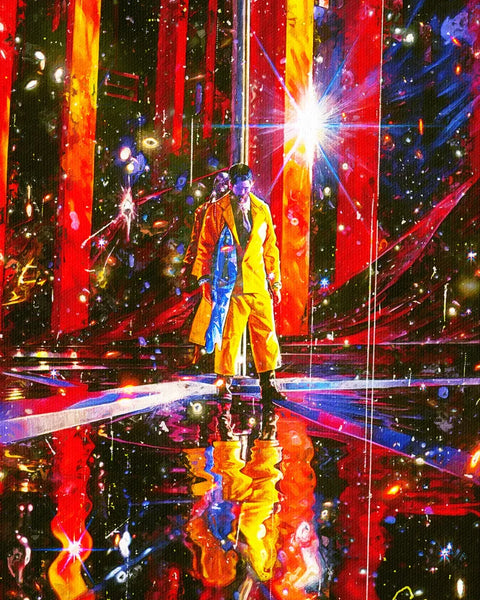
Baptism
-
 APEX, 1 edition. Open the tier key.
$532SOLD
APEX, 1 edition. Open the tier key.
$532SOLD- Nt2
- Sg
- Wn
- Cg
- Sh
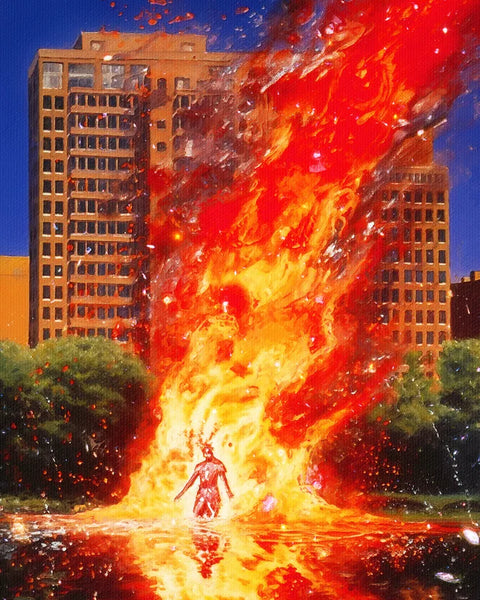
Crossroads
-
 APEX, 1 edition. Open the tier key.
$381SOLD
APEX, 1 edition. Open the tier key.
$381SOLD- Ig2
- Hs
- Ac
- Wn
- Hr
Coming To My Senses
-
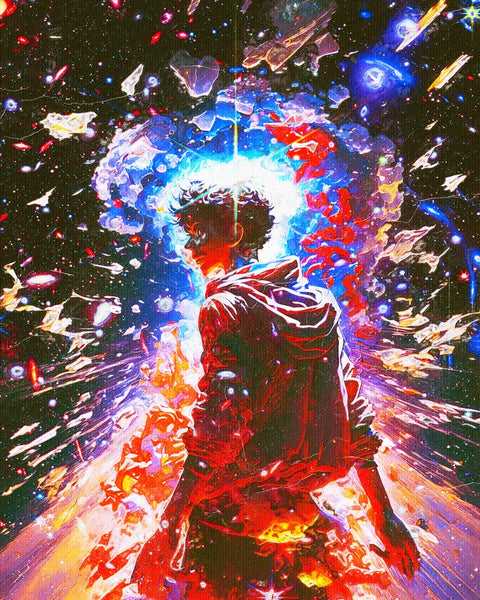 APEX, 1 edition. Open the tier key.
$372SOLD
APEX, 1 edition. Open the tier key.
$372SOLD- Pr2
- Tm
- Wn
- Hs
- Nm
I Can See How This Ends
-
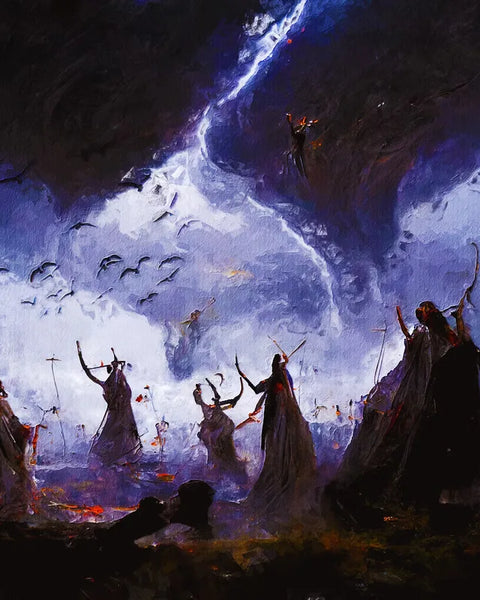 APEX, 1 edition. Open the tier key.
$941SOLD
APEX, 1 edition. Open the tier key.
$941SOLD- Ac2
- Rn
- Aw
- Wn
- Nm
After Death, the Gods Rise to Create the World Again
-
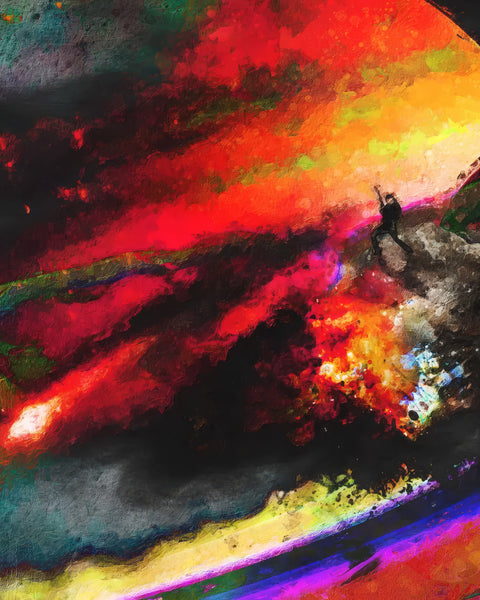 APEX, 1 edition. Open the tier key.
PRIVATESOLD
APEX, 1 edition. Open the tier key.
PRIVATESOLD- Sl2
- St
- Wn
- Dv
Intergalactic Glucose
-
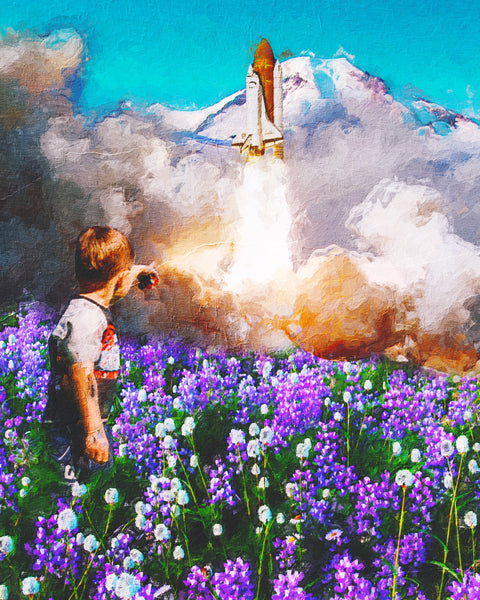 APEX, 1 edition. Open the tier key.
$1315SOLD
APEX, 1 edition. Open the tier key.
$1315SOLD- Cr2
- Hs
- Tn
- Wn
GAS IT!
-
 APEX, 1 edition. Open the tier key.
$680SOLD
APEX, 1 edition. Open the tier key.
$680SOLD- Aw2
- Tm
- Wn
- Nm
The Beginning of the Universe
-
 ARCHIVAL, 5 editions. Open the tier key.
PRIVATESOLD
ARCHIVAL, 5 editions. Open the tier key.
PRIVATESOLD- Wn2
- Aw
- Tm
- Dv
Age of the Stars


How big, actually.
Drawn to scale against a person of average height. Every size is a 4:5 rectangle, the same proportion as the work itself, so nothing is cropped to fit.
Sizes are the printed image. Framed works add the moulding around that. Standard US shipping is free at every size.
Paper, or canvas.
Same image, same inks. What changes is the surface it is printed on. Tap either one.
-
PRINT
Hahnemühle Photo Rag
The paper itself. A heavy 100% cotton matte sheet with a smooth surface, printed edge to edge with no border. Ships flat, or rolled in a tube at large sizes.
- Every size, up to 40 × 50
- You pick the frame
- Just paper and ink
- Needs framing to hang
-
CANVAS
Satin poly-cotton, gallery wrap
Printed on canvas, then stretched by hand over solid wood. The image continues around the sides, so there is no border and no glass.
- Hang it the day it lands
- No glass, no glazing
- Real depth off the wall
- Up to 36 × 45
Series 001 numbers are shared across every size and material, and the certificate records exactly which object you own. Open editions carry no number and no certificate.
Framed, or not.
One frame, satin black, solid wood. We pick the moulding that suits the size and the material, so it arrives ready to hang. Tap either one.
-
NONE
The work, as it is
A paper print ships flat or rolled and you frame it your way. A canvas needs nothing: it is stretched, wired and ready for the wall the day it lands.
- The lightest to ship
- Your framer, your call
- Canvas hangs as it is
- Every size
-
BLACK
Solid wood, chosen for the size
Sealed, hung with hardware fitted, nothing left to arrange. Paper sits behind acrylic; canvas floats inside the moulding with no glass at all.
- STANDARD BLACK ⅞ in face · ¾ in deep · behind acrylic Paper, 8 × 12 and 12 × 18
- ALTO BLACK THIN 1⅜ in face · ⁹⁄₁₆ in deep · behind acrylic Paper, 16 × 24 and up
- BLACK 2 FLOAT ⅜ in face · 2 in deep · ¼ in reveal · no glass Canvas, every framed size
Framed work ships boxed with the hardware fitted. The largest sizes are sold unframed, because a frame that size can only travel by freight.
The list hears first.
Composed with
- Aw Awe 4 works
- Hs Hope 4 works
- Nm Numinous 3 works
- Tm Transcendence 3 works
- Ac Ascendance 2 works
- Dv Dépaysement 2 works
The rest of the Rising family
Where Wonder sits Wn · RISING FAMILY
OPEN THE TABLE
1IgFervour
2EcEcstasy
3TnTension
5PrPower
6NtAnticipation
9SgSurrender
7TmTranscendence
8AcAscendance
10DrDread
4FrFear
11SuSublimity
12AwAwe
13WnWonder
14EnEntrancement
15AeAesthetic Pleasure
16CrCraving
17EvEnvy
18EpEmpathic Pain
25VdVoid
24DcDecay
21RnRuin
22GrGrief
26NsNostalgia
23SdSadness
27MxMelancholy
28CtTenderness
19AdAdmiration
20JoJoy
32DtDevotion
34LoLonging
36SlSolitude
37StStillness
33RtRelief
30GtGratitude
38SfSatisfaction
31HsHope
39CmCalm
35WcContempt
29AnAnger
47EmEmbarrassment
44DxDisgust
43AxAnxiety
45SmShame
46GlGuilt
40SpSurprise
49CnConfusion
41InInterest
42TsTrust
48EqEquanimity
50BrBoredom
55RgRegret
57NzNumbness
52LnLoneliness
58AqAwe-Quiet
60DzDetachment
59PcPeace
53WtWeariness
54RsResignation
56PdPride
61LvLove
51CgCourage
62SaSaudade
63HrHiraeth
64MnMono no Aware
65ShSehnsucht
66YbYaaburnee
67DvDépaysement
68NmNuminous
69ApApophenia
70KyKoyaanisqatsi
71AbAbject
72WsWonder-Sacred
73DuDuende
74PtPresence
75WbWabi-Sabi
?
?
?
?
?
RISING FAMILY75 NAMED · 5 UNDISCOVEREDTAP ANY CELL TO OPEN ITS PAGE