THE STUDY · NO. 05

The Customs House

fourteen names from the rare column

THE RARE COLUMN · CELLS 62–75
SCROLL
01 · The frame

Fourteen states sit outside the table's common vocabulary. Most of their names came from somewhere else.

A work can leave behind a feeling precise enough to recognize and hard to hold in one familiar word: sad, but warm, with a little light still inside it. This table reaches beyond common English when the nearest name becomes too blunt. A borrowed word is not proof that a feeling belongs to only one language. It is the name this project chose for that cell.

The rare column holds cells 62 through 75. Most names were borrowed from other languages. Wonder-Sacred was made in the studio, and Presence was already plain English. What joins them is not foreignness. Each one covers ground the other cells left open.

02 · The rule

What it takes for a word to get a cell.

IThe state

A word enters only if an artwork can place the viewer inside the state it names. A subject or action does not qualify on its own.

IIThe gap

The word must cover ground no existing cell holds. A familiar word, a borrowed word and a studio coinage face the same test. Need earns the space.

IIIThe lineage

Each entry names the language or studio source used by this table and distinguishes a borrowing from plain English or a coinage. The notes are working definitions, not complete cultural histories.

IVThe carrier

A catalogued work must carry the feeling clearly enough to hold the cell open. Duende is the lone exception. Lineage opened it, and two works now carry it at trace.

03 · The fourteen

The rare column, page by page.

Each word appears first in the script used by its source when the studio could verify one. Beside it: the table's working definition, its recorded lineage, how this project reads the feeling, and which works carry it. The cell drops into place when the page enters view.

Page 62 · rare columnPortuguese
IN THE TABLERARE COLUMN
62SaThe PortugueseSaudade
saudade
The Portuguese
Where this table found it

Portuguese and Galician, with an etymology often traced to the Latin solitas, solitude. Fado gives the feeling one of its clearest musical forms.

What it names
Portuguese. Longing in which absence, affection and pain can remain together, sometimes for what may never return and sometimes for what never happened at all.
How this table reads it

The missing person, place or era can sit beside you, almost warm, and because the memory still gives something back, the pain never arrives alone. The Portuguese speak of saudade as something loved and suffered. It can even belong to a life that never happened.

ENTER CELL 62 · SAUDADESa · THE PORTUGUESE

Page 63 · rare columnWelsh
IN THE TABLERARE COLUMN
63HrThe Welsh AcheHiraeth
hiraeth
The Welsh Ache
Where this table found it

Welsh. Wales.com describes it through the feeling of being both at home and away from it. English homesickness catches part of the word, not all of its use.

What it names
Welsh. A longing for home, place or belonging that may be beyond return. In this table, the grief faces a place more than a person.
How this table reads it

The home is missing from every map. It may be a vanished version of a real place, an imagined place, or the person you were the last time you stood there. The ache stays low and steady. Returning cannot cure it because the destination is a time.

ENTER CELL 63 · HIRAETHHr · THE WELSH ACHE
Page 64 · rare columnJapanese
IN THE TABLERARE COLUMN
64MnThe Passing-OfMono no Aware
物の哀れ
MONO NO AWARE · The Passing-Of
Where this table found it

Japanese, often rendered as the pathos of things. In the eighteenth century, the scholar Motoori Norinaga developed the term through his reading of The Tale of Genji and the feeling of impermanence inside it.

What it names
Japanese. The gentle ache of knowing things pass. Their ending sharpens their beauty; the feeling sits a little distance from sorrow.
How this table reads it

You notice the thing fully and, in the same moment, understand that it will end. No tragedy has to occur. Attention is enough. The ache leans closer to tenderness than sorrow, sharpening the present while it is still here.

ENTER CELL 64 · MONO NO AWAREMn · THE PASSING-OF
Page 65 · rare columnGerman
IN THE TABLERARE COLUMN
65ShThe Yearned-ForSehnsucht
Sehnsucht
The Yearned-For
Where this table found it

German, from sehnen, to yearn, and Sucht, an old word for sickness or addiction. The Romantics built a literature around it. C. S. Lewis spent a career circling it in English, calling it the inconsolable longing for we know not what.

What it names
German. A deep yearning whose object can remain distant, unstable or impossible to name.
How this table reads it

The wanting has no address. It tests itself against places and people, even a remembered thing, and each one fails to hold it. The pull remains somewhere behind them. Beauty often wakes it, especially music, and leaves you homesick for somewhere you have never been.

ENTER CELL 65 · SEHNSUCHTSh · THE YEARNED-FOR
Page 66 · rare columnLevantine Arabic
IN THE TABLERARE COLUMN
66YbBury Me FirstYaaburnee
يقبرني
YAABURNEE · Bury Me First
Where this table found it

A Levantine expression of endearment used across several dialects. Transliterations vary. This table keeps Yaaburnee and the literal burial image while treating the fuller emotional reading as interpretation.

What it names
Levantine Arabic. Roughly, may you bury me: the wish to die before someone you love so you never have to survive them.
How this table reads it

It can open in the middle of ordinary happiness. Someone laughs, and suddenly the future tilts: one of you will go first. Love and dread face the same direction. The feeling is heaviest where the love is whole.

ENTER CELL 66 · YAABURNEEYb · BURY ME FIRST
Page 67 · rare columnFrench
IN THE TABLERARE COLUMN
67DvThe UprootedDépaysement
dépaysement
The Uprooted
Where this table found it

French, from pays, country. The word is broader than this cell: it can describe being unsettled, displaced or simply removed from the ordinary. The table records one edge of that range.

What it names
French. Dépaysement can mean disorientation outside familiar surroundings or the refreshment of a change of scene. This cell keeps the vertigo side of the word.
How this table reads it

Habit loses its floor. Street signs read wrong, bread tastes different, and your own name changes in another mouth. Anxiety and exhilaration can arrive together. The senses wake to a resolution they never need at home.

Page 68 · rare columnEnglish
IN THE TABLERARE COLUMN
68NmThe TremblingNuminous
numinous
The Trembling
Where this table found it

The theologian Rudolf Otto introduced the modern term in 1917 from the Latin numen, the nod of a divine will. He needed a name for the raw experience beneath every religion: a mystery that makes the body tremble and still will not let it leave.

What it names
From the Latin numen. The feeling of standing before something vastly greater. Fear and attraction move at once around a sense of holiness, whether or not a religion is named.
How this table reads it

The room feels occupied. Skin prickles and the voice lowers; you want to hide and stay at once. Belief is not required. It happens in cathedrals, at sea, and before certain images.

ENTER CELL 68 · NUMINOUSNm · THE TREMBLING
Page 69 · rare columnEnglish
IN THE TABLERARE COLUMN
69ApFalse PatternApophenia
apophenia
APO + PHAINEIN · False Pattern
Where this table found it

The psychiatrist Klaus Conrad coined the word in 1958 while watching meaning crystallize from noise at the onset of psychosis. It escaped the clinic. Now it names the ordinary human habit of finding a pattern nobody placed.

Note on the record

The Greek roots are ancient; the assembly date is 1958. The record keeps both.

What it names
Meaning appearing inside randomness. A face rises from noise, a sign from coincidence. The mind refuses to accept that nothing is being said.
How this table reads it

A face appears in the wall socket. Initials gather in the clouds. Three coincidences braid themselves into fate, and the click feels exactly like insight until the vertigo arrives: the mind can make that sound whether or not anything is there.

ENTER CELL 69 · APOPHENIAAp · FALSE PATTERN
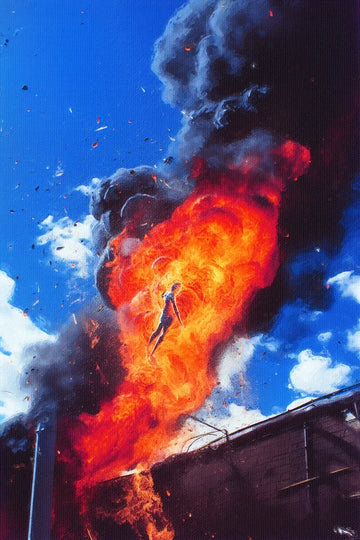
Page 70 · rare columnHopi (romanized)
IN THE TABLERARE COLUMN
70KyOut of BalanceKoyaanisqatsi
koyaanisqatsi
Out of Balance
Where this table found it

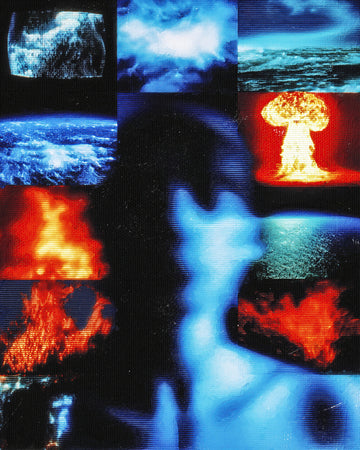
Hopi, commonly rendered as life out of balance, a state of living that calls for another way. Godfrey Reggio used it as the title of his 1982 film, which has no dialogue and builds its argument through accelerating footage and a Philip Glass score.

Note on the record

This word remains in Roman letters here. Hopi carries it in the voice. No native script is drawn without a source the studio can stand behind; the romanization is the honest record.

What it names
Hopi. Life out of balance. A world moving at a speed that no longer fits the living inside it.
How this table reads it

Speed becomes the dread. Every system seems to work while the whole remains wrong: feeds refresh, traffic flows, and the sky glows at midnight. Underneath runs the certainty that the pace itself is the disease. The feeling belongs to the whole system, larger than personal anxiety.

ENTER CELL 70 · KOYAANISQATSIKy · OUT OF BALANCE
Page 71 · rare columnEnglish
IN THE TABLERARE COLUMN
71AbThe Sublime-DarkAbject
abject
The Sublime-Dark
Where this table found it

From the Latin abicere, to cast off. Julia Kristeva gave it its modern weight in 1980: what the self throws out to remain itself, and the horror when that cast-off thing comes back into view.

What it names
Horror at the border between the self and everything outside it. What must be cast away to keep the self intact, and the fascination that survives the disgust.
How this table reads it

The corpse, the wound, the thing that was inside now outside: revulsion arrives with recognition, because the self is implicated. For one moment the border of the body fails. The same motion pushes the eye away and pulls it back.

ENTER CELL 71 · ABJECTAb · THE SUBLIME-DARK
Page 72 · rare columnEnglish coinage
STUDIO COINAGENOT A LOANWORD
72WsHoly AttentionWonder-Sacred
wonder-sacred
Holy Attention
Where this table found it

A studio designation, created here. English keeps wonder and worship in separate rooms. This word names the corridor between them, where attention begins to behave like prayer.

Note on the record

This is the only word in the column made by the studio. It names the gap between wonder and worship without pretending to be inherited.

What it names
Wonder carrying the quality of prayer. Attention becomes devotional even when belief never enters.
How this table reads it

Wonder goes quiet. Questions stop. Looking becomes enough, then deepens into attendance. Time thickens around the object until it seems to be the only thing being done in the world.

ENTER CELL 72 · WONDER-SACREDWs · HOLY ATTENTION
Page 73 · rare columnSpanish
CELL OPENCARRIED AT TRACE
73DuThe Dark SoundDuende
duende
The Dark Sound
Where this table found it

Spanish, contracted from an old phrase for the master of the house: a household spirit. Federico García Lorca's 1933 lecture made it the name for the dark force in real performance. The force is separate from muse and angel. It rises through a living body from the soles of the feet and needs death nearby.

Note on the record

Lineage opened this cell. Two catalogued works now carry it at trace: So Sick of Feeling and The Rage In My Resonance. A work that carries it outright is still a standing brief.

What it names
Spanish. The dark spirit that enters a maker during real work. Lorca placed it apart from the muse, which dictates from outside, and the angel, which guides. Duende rises from the soles of the feet and takes the body. Death must be somewhere in the room. It cannot be taught or summoned.
How this table reads it

Possession during making. The plan falls away and the work has to be survived, the voice cracks in the right place, the line goes somewhere the hand did not prepare. Everyone in the room feels the temperature change. It cannot be scheduled. It does not come when called.

ENTER CELL 73 · DUENDEDu · THE DARK SOUND
Page 74 · rare columnEnglish
IN THE TABLERARE COLUMN
74PtWeight-of-NowPresence
presence
Weight-of-Now
Where this table found it

Plain English, from the Latin praesentia. The table uses the ordinary word for an unusually complete state: actually being where you are.

What it names
The weight of now. Full occupancy of the present moment. The mind releases what came before and what might come next.
How this table reads it

Past and future release their hold long enough for the current second to widen. The commentary is gone; colors seem slightly fuller, and the body is finally where it is. The state costs nothing and still arrives rarely.

ENTER CELL 74 · PRESENCEPt · WEIGHT-OF-NOW
Page 75 · rare columnJapanese
IN THE TABLERARE COLUMN
75WbThe Tender RuinWabi-Sabi
侘寂
WABI-SABI · The Tender Ruin
Where this table found it

Japanese, joining wabi and sabi, terms whose meanings changed across centuries of art and tea practice. Weathering, restraint and the marks of time sit inside the lineage. Kintsugi is often discussed beside it, but it is not a synonym.

What it names
Japanese. This table uses the familiar English gloss: attention to imperfection, impermanence and incompleteness. That gloss is an adaptation, not a complete translation of Japanese aesthetics.
How this table reads it

Relief comes when the demand for perfection loosens and the crack, the fading and the asymmetry no longer need to be excused. They tell the truth about time. The feeling is quiet and long-lived, closer to trust than pleasure.

ENTER CELL 75 · WABI-SABIWb · THE TENDER RUIN
04 · The index

The rare column at a glance.

CELLSYMWORDSCRIPTLANGUAGEWORKSSTATUS
62SaSaudadesaudadePortuguese1IN THE TABLE
63HrHiraethhiraethWelsh2IN THE TABLE
64MnMono no Aware物の哀れJapanese7IN THE TABLE
65ShSehnsuchtSehnsuchtGerman5IN THE TABLE
66YbYaaburneeيقبرنيLevantine Arabic3IN THE TABLE
67DvDépaysementdépaysementFrench2IN THE TABLE
68NmNuminousnuminousEnglish13IN THE TABLE
69ApApopheniaapopheniaEnglish1IN THE TABLE
70KyKoyaanisqatsikoyaanisqatsiHopi (romanized)1IN THE TABLE · ROMANIZED
71AbAbjectabjectEnglish7IN THE TABLE
72WsWonder-Sacredwonder-sacredEnglish coinage7STUDIO COINAGE
73DuDuendeduendeSpanish2IN THE TABLE · NO WORK YET
74PtPresencepresenceEnglish5IN THE TABLE
75WbWabi-Sabi侘寂Japanese1IN THE TABLE
05 · The debt
These names came from different places. Each one gives a precise feeling somewhere to stand.

Every entry names its language or studio source. A loanword stays credited. A studio coinage says it was made here. Plain English is never dressed up as foreign. These are definitions inside this project, not claims that one culture owns a universal feeling.

Fourteen entries fill the column. Duende is carried at trace by two works. The next name, wherever it comes from, has to earn its cell.

The rare column

Take one of these words with you.

XPRMTS · PERMANENCE IN TEMPORARY STATESTHE CUSTOMS HOUSE · CELLS 62–75

SHOPPING FROM

Country & currency

Choose your delivery country. Prices update to its currency.